
Legal translation in the UAE is required when a document that is not in Arabic goes to a court, ministry, notary or other official body. Contracts, court papers, powers of attorney, civil status certificates and corporate records are the most common examples. The exact rule depends on the receiving authority, so check with it first. This guide explains which documents qualify, what a valid translation must include, and how to arrange one through a Ministry of Justice-approved provider in Dubai.
What Is Legal Translation in the UAE?
Legal translation is the conversion of an official or legal document into another language, usually Arabic, by a translator registered with the UAE Ministry of Justice (MOJ). The translator adds a stamp and signature to confirm the translation is accurate and complete.
Federal Decree-Law No. 22 of 2022 regulates the profession, and the Ministry keeps a list of registered translators and translation houses. A translation from outside that list, or from software, may not carry the standing that courts and ministries expect.
Which Documents Require Legal Translation?
Any non-Arabic document submitted for an official purpose can trigger the requirement. The most common groups are:
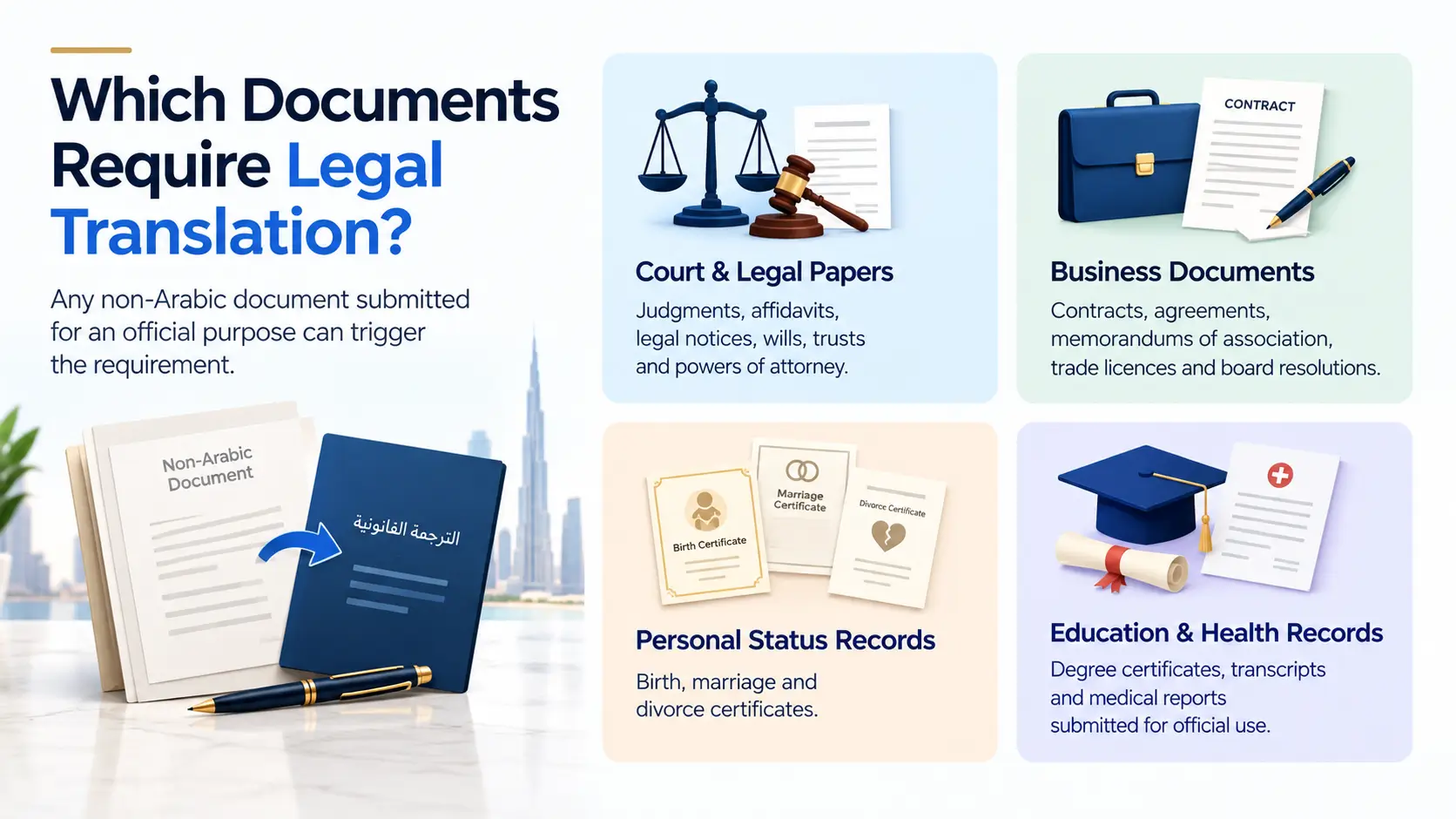
- Court and legal papers: judgments, affidavits, legal notices, wills, trusts and powers of attorney
- Business documents: contracts, agreements, memorandums of association, trade licences and board resolutions
- Personal status records: birth, marriage and divorce certificates
- Education and health records: degree certificates, transcripts and medical reports submitted for official use
Each authority decides what it accepts, so a quick check before translating saves repeat work. Documents already written in Arabic need no translation for local use. Courts in the Dubai International Financial Centre (DIFC) operate in English, which changes the language requirement for matters filed there.
When Do You Need Legal Translation?
You need it when a non-Arabic document is about to be submitted: a court filing, a company licence application, a visa or residency file, a property transaction, a bank request or an embassy submission. Start once the document is final, because the translation must match the version you submit.
Foreign-issued documents usually go through attestation as well. The Ministry of Foreign Affairs (MOFA) accepts originals in Arabic or English, or legally translated, so the order of translation and attestation depends on the document and the receiving authority. For UAE documents going abroad, the destination country’s embassy or authority sets the language rule.
What Should You Prepare?
Gather the complete document, including every page, the reverse side and any stamps or handwritten notes. Add a passport or Emirates ID copy so the translator spells names exactly as official records show them. Note which authority will receive the translation and which language it requires. Clear scans speed up the review.
Requirements for Legal Translation in the UAE
Authorities check a few points before they accept a translated document:
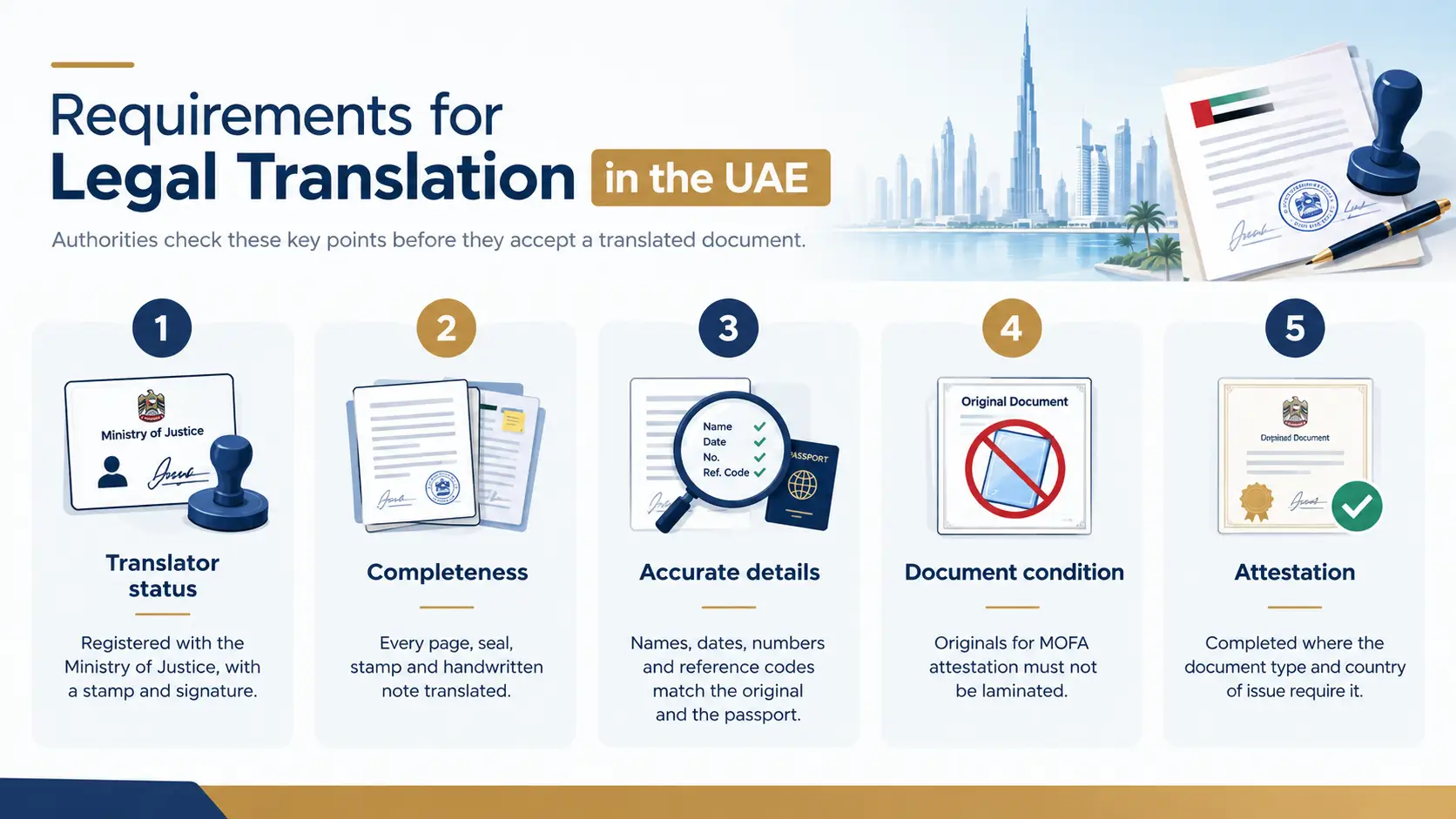
- Translator status: registered with the Ministry of Justice, with a stamp and signature on the translation
- Completeness: every page, seal, stamp and handwritten note translated
- Accurate details: names, dates, numbers and reference codes match the original and the passport
- Document condition: originals meant for MOFA attestation must not be laminated
- Attestation: completed where the document type and country of issue require it
Rules differ between authorities, so confirm against the receiving body’s own checklist.
How Long Does Legal Translation Take?
No single timeframe applies. Page count, language pair, subject complexity, scan quality and the number of documents all affect turnaround. So does any notarisation or attestation that follows. A provider can give a realistic estimate only after reviewing the actual files, which is how Alif Talent works. Allow extra time when attestation must come first, because each government step runs on its own schedule.
What Happens After the Translation?
You receive the translated document with the translator’s stamp and signature. Submit it with the original, following the authority’s instructions. Reviewers compare the two, so a missing page or a spelling difference in a name can lead to rejection. Some bodies may also ask for the translation itself to be attested or notarised, so confirm that before filing.
How to Get a Legal Translation Done
- Ask the receiving authority which language, translation type and attestation it requires.
- Complete any attestation that must come first.
- Send clear copies of every page to your translation provider.
- Review the quotation and confirm the order.
- Let the translator prepare and review the document.
- Check names, dates and numbers on delivery, then submit.
How Much Does Legal Translation Cost?
Alif Talent quotes after reviewing your document rather than publishing a fixed rate. Several factors shape the figure. Document length and density set the base. Rare language pairs, technical or legal complexity, poor scan quality and tight deadlines usually raise the price. Notarisation or attestation adds separate costs. Ask for a quotation that states exactly what it covers.
Get Your Documents Translated with Alif Talent
Alif Talent, based near DIFC in Dubai, provides MOJ-certified legal translation in 130+ languages for contracts, court papers, powers of attorney, certificates and other official documents. The team also assists with notarisation and attestation, so related steps stay with one provider. Send your documents through WhatsApp or the website to receive a quotation and guidance on what your receiving authority needs.
Frequently Asked Questions
Do all foreign documents need legal translation into Arabic?
Not always. Most onshore courts and ministries expect Arabic, but requirements differ by authority and purpose. Confirm with the receiving body before ordering.
Can I use an online tool or a general translator for official submissions?
Official bodies generally expect a translation from an MOJ-registered translator, with stamp and signature. A machine or general translation helps you understand a document, but it is not suited to filing.
What is the difference between attestation and legal translation?
MOFA describes attestation as verifying the authenticity of signatures and seals on a document. Translation changes the document’s language. Many foreign documents need both.
Should I translate before or after attestation?
It depends on the document and the authority. MOFA accepts originals in Arabic or English, or legally translated, so ask the receiving body which sequence it prefers.
Can UAE-issued documents be translated for use abroad?
Yes. The destination country’s embassy or authority sets the language and any attestation steps, so check them before you start.
How can I confirm a translator is registered with the MOJ?
The Ministry maintains a list of registered translators and translation houses. Ask your provider for the translator’s registration details and check them against that list.
Conclusion
Legal translation in UAE comes down to three checks: the document, the receiving authority and the translator’s registration. Settle those first, prepare complete copies, and the translation step runs with far fewer surprises.