
Legal translation in Dubai is the translation of legally binding or officially submitted documents into the language the receiving authority requires, usually Arabic. The translation must keep the original meaning and legal effect intact. For official use, a translator licensed by the UAE Ministry of Justice typically signs and stamps the result. This guide covers what qualifies, when you need it, what to prepare, what affects timing and cost, and how to start.
What Is Legal Translation in Dubai?
Legal translation converts a document that carries legal weight into another language without changing its meaning, structure or effect. A contract clause, a court order or a power of attorney works because specific words create specific obligations. The translator reproduces those obligations exactly instead of paraphrasing them.
Dubai adds an official layer. Arabic is the UAE’s official language, and authorities generally expect foreign-language documents in Arabic. The Ministry of Justice (MOJ) accredits legal translators, and the translator’s signature and stamp make the translation usable for official purposes.
Which Documents and Translations Count as Legal Translation?
General translation suits brochures, websites and correspondence. Legal translation applies when a document creates, proves or disputes a right or obligation.
Typical examples include contracts and agreements, powers of attorney, affidavits, wills, court judgments and notices, corporate and commercial documents, and civil records such as birth and marriage certificates.
Direction also matters. A document issued abroad usually goes into Arabic for use in the UAE, while a UAE document headed overseas may need English or another language. The receiving authority sets the language and format, so confirm both before you order. Alif Talent describes its legal translation as MOJ-certified for eligible documents, subject to what each authority accepts.
When Do You Need a Legal Translation?
You need one whenever a foreign-language document enters an official process in the UAE. Common triggers include filing or answering a court case, registering a company or amending corporate records, notarisation and attestation, visa and residency applications, and submissions to embassies, banks or free zone authorities.
Arrange the translation early. A procedure that rejects an incomplete file sends you back to the start.
If the document also needs attestation, ask the receiving authority whether translation comes before or after that step. The order varies by document and country of origin.
What Do You Need to Provide?
Start with the source document: a complete, legible copy showing every page, stamp, seal, signature and handwritten note. A cropped scan or a missing back page forces the translator to guess or delay.
Tell the translator which authority will receive the document and in which language, because that determines format and certification. Also supply the spelling of names exactly as they appear on passports or Emirates IDs. Inconsistent spellings across documents can make an authority question a file.
What Are the Requirements for a Valid Legal Translation?
Requirements differ by authority, but an official translation generally meets these standards:
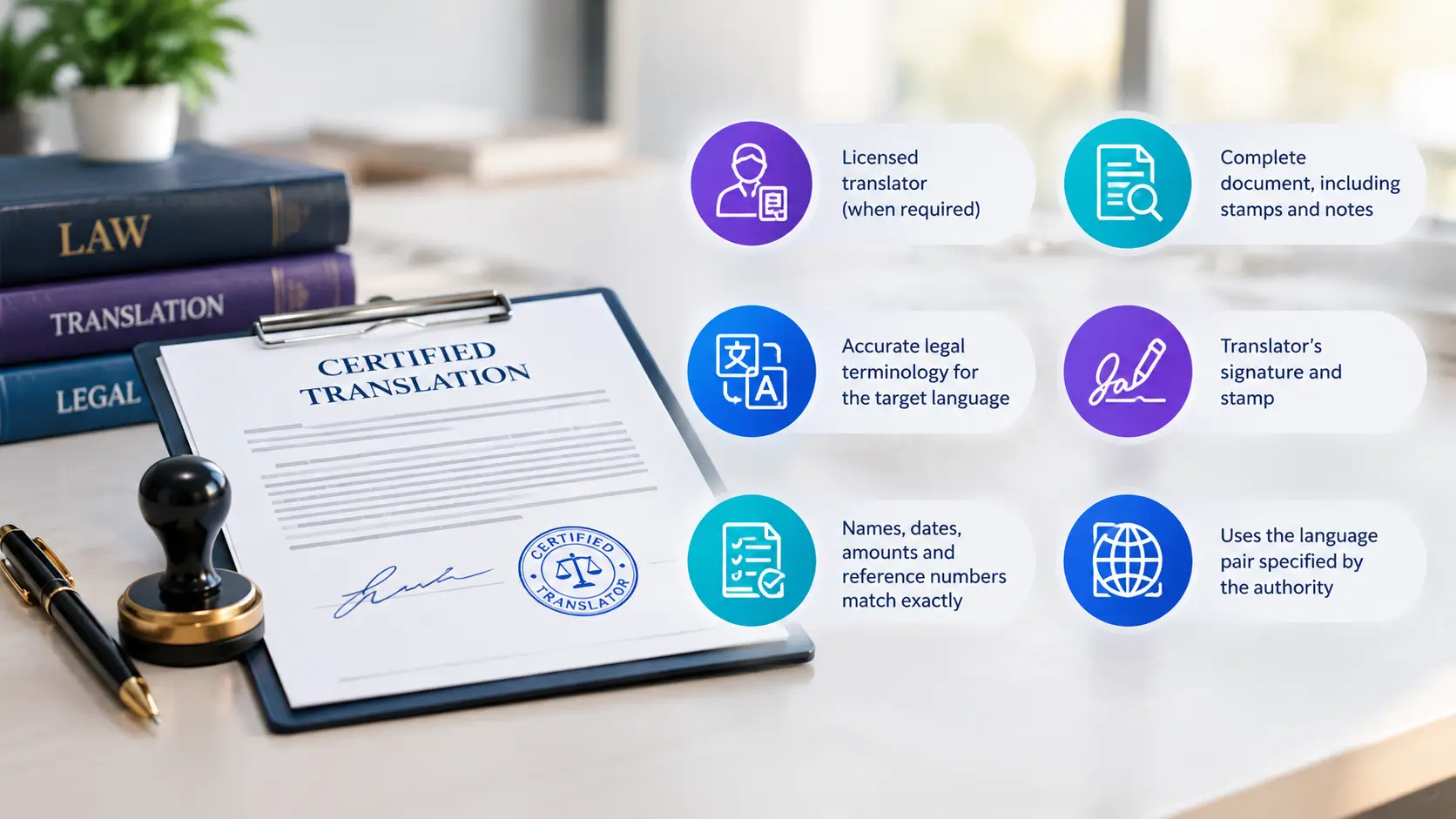
- A translator licensed by the Ministry of Justice prepares it, where the authority asks for an official translation.
- It renders the entire document, including stamps, seals, annotations and marginal notes, with nothing summarised or left out.
- It uses legal terminology that matches how the target language expresses the same concept.
- It carries the translator’s signature and stamp.
- Names, dates, amounts and reference numbers match the source exactly.
- It uses the language pair the receiving authority specifies.
How Long Does Legal Translation Take?
Duration depends on word count, language pair, how technical the text is, how legible the scan is, and whether the authority needs further steps such as notarisation or attestation. A two-page certificate and a hundred-page agreement sit at opposite ends of the range.
Alif Talent states that it gives the applicable timeline after reviewing the documents. That is the reliable route to a real answer, so treat any fixed promise made without seeing the file with caution.
What Happens After the Translation Is Ready?
You receive the translation bearing the translator’s signature and stamp, usually alongside a copy of the source. Check every name, date and number against the original before you submit it. Correct errors now rather than after an authority objects.
The next step depends on the destination. Some bodies accept the stamped translation as it is. Others require notarisation or further attestation, for example through the Ministry of Foreign Affairs (MOFA). Ask the receiving body, then schedule that step before your deadline.
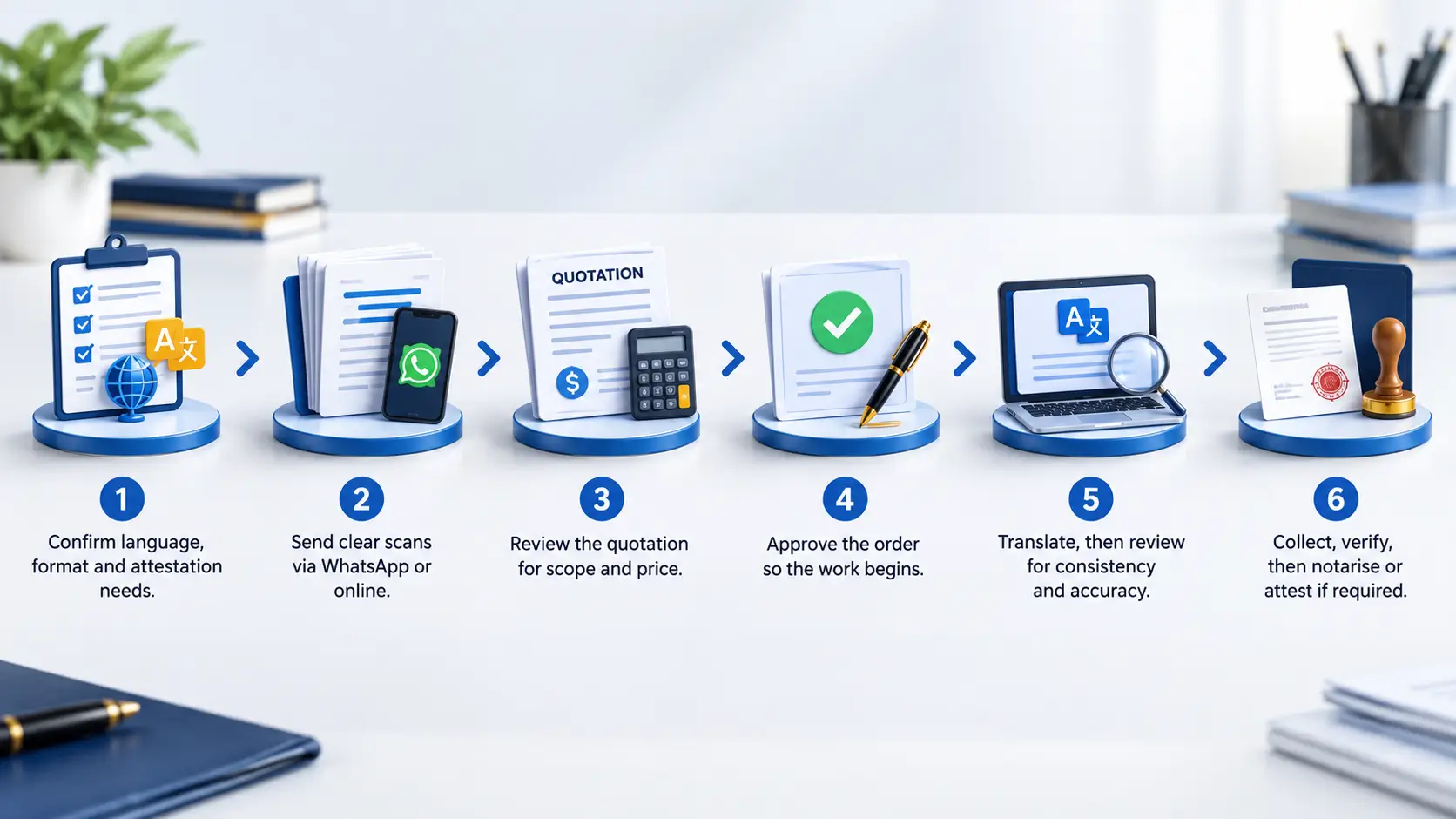
How Does the Legal Translation Process Work?
- Confirm the required language, format and any attestation needs with the receiving authority.
- Send clear scans of every page to the translation office. Alif Talent accepts documents through WhatsApp or online.
- Review the quotation, which covers the scope and price.
- Approve the order so the work begins.
- A linguist translates the document, and a second review checks consistency and accuracy.
- Collect the signed and stamped translation, verify the details, then move on to notarisation or attestation if required.
How Much Does Legal Translation in Dubai Cost?
Alif Talent does not publish a fixed price list on the pages reviewed. It issues a quotation after assessing the document, so the final figure reflects what you actually submit. These factors move the price:
- Length of the document, by page or word count
- Language pair, since less common combinations take more effort to source
- Complexity, including technical terminology, tables, handwriting and heavy formatting
- Urgency of delivery
- Add-on services such as notarisation or attestation
Get Your Documents Assessed
If a Dubai court, ministry or embassy has asked you for a translated document, send Alif Talent a scan along with the name of the receiving authority. The team reviews the document, confirms which service it needs and gives you a quotation before work starts. Because Alif Talent also handles notarisation and attestation, you can manage the translation and the step that follows it in one place.
Frequently Asked Questions
Is legal translation the same as certified translation?
The terms overlap. Legal translation describes the subject matter, while certified describes the translator’s signature and stamp. For official use in the UAE, a legal document usually needs both.
Do I have to translate my documents into Arabic?
Courts and government departments generally require Arabic. Private parties may accept other languages. The receiving authority confirms its requirement.
Can I use machine translation or a bilingual friend?
Neither carries a licensed translator’s signature and stamp, so neither will generally satisfy an authority that asks for an official translation. Machine output also cannot guarantee the exact legal terminology a contract or judgment demands.
How can I check that a translator is licensed?
Ask for the translator’s licence details and verify them through the Ministry of Justice, which registers legal translators.
Does translation replace attestation?
No. Translation changes the document’s language. Attestation verifies the document or its signatures. Many submissions need both.
Can I get a quotation before committing?
Yes. Alif Talent’s process places the quotation after document review and begins work only after you confirm the order.
Conclusion
Legal translation in Dubai means an accurate, complete rendering of a legal document in the language an authority requires, certified by a licensed translator. Confirm the authority’s requirements first, prepare complete scans, and check the finished translation against the original. Those three steps prevent most delays.